The first time I saw a physician lose their license for something other than clinical incompetence, it felt like watching a hit-and-run in slow motion. He was a sharp internist, great bedside manner, never had a bad outcome. But one afternoon, a state board audit flagged a timestamp discrepancy: he had documented a telemedicine visit as starting at 2:15 PM while the platform's login log showed 2:28 PM. Thirteen minutes of "lost time." The automated auditor didn't care about the diagnosis. It cared about the violation of digital protocol. In the blink of an eye, his license was suspended, his payer contracts terminated, and his career derailed, not because he was a bad doctor, but because he didn't realize the rules had changed.
I've been inside the meetings. I've heard the program directors and compliance officers talk about what actually triggers an investigation. The truth is ugly: regulators and payers have shifted from evaluating clinical judgment to evaluating process fidelity. They deploy algorithms to sift through encounter metadata, platform logs, geolocation stamps, and prescription routing codes long before any human ever opens the chart. There's a new mantra in the telemedicine world: if the protocol wasn't followed, the diagnosis doesn't matter. This article isn't about misdiagnosis. It's about the silent, boring, administrative landmines that will blow up your career while you're busy trying to be a good doctor.
Disclaimer: This article is for educational purposes only. It is not legal advice, not financial advice, and not tax advice. Figures vary, and you should consult a qualified professional for your specific situation.

The Silent Killer of Your License: It's Not What You Think
Let's get one thing straight. The old model of discipline was slow, human, and clinical. A peer reviewer would look at a case weeks later and maybe ask, "Did you miss that subtle MI?" Now it's algorithmic, instantaneous, and administrative. Auditors don't ask whether you practiced good medicine. They ask whether the metadata proves you practiced legal telemedicine.
I've sat through risk management meetings where the head of compliance shows a dashboard that looks like a Bloomberg terminal. Every provider's encounter gets scored on a dozen flag variables: Did the video feed stay within a single encrypted session? Was the patient's IP address reconciled with their stated physical location? Did the note contain the mandatory emergency plan field? Fail one of these, and a yellow flag goes to a human reviewer. Fail two, and it's red. Fail three, and you're staring at a suspension letter before your next shift.
State boards and payers are weaponizing these data audits. They're not waiting for a patient complaint. They're proactively hunting for patterns. The message is clear: medical competence is now table stakes. Compliance is the gatekeeper. And you're not nearly as compliant as you think.
Mistake #1: The 'One Platform, One Patient' Violation
Here's a scenario I've seen more times than I can stomach. A telemedicine visit starts on a HIPAA-compliant video platform. Midway through, the patient says, "Hey, can I just text you that photo of the rash?" The doctor, trying to be helpful, says sure. They move to a text conversation on the same app, maybe even a secure chat, but here's the kick: the platform's audit trail registers that as a separate encounter. The session ID changes. The documentation fragments. Instantly, you've violated the "single encounter, single platform" integrity rule that most telemedicine policies demand.
Program directors despise this. It makes the medical record a patchwork of timestamped interactions that no auditor can follow. Worse, it creates liability gaps: if something goes wrong, which part of the conversation is legally binding? The video consult? The chat? Neither may be defensible because the consent for telemedicine was tied to the modality initially started.
Switching from a video session to a phone call, email, or even a non-integrated text feature? That's the digital equivalent of operating on the wrong limb. I've seen a family medicine colleague get suspended for exactly this: she started on a compliant video app, then finished a medication reconciliation via the patient portal's chat function, which the system treated as a separate, unverifiable entity. Her license was suspended for 30 days. Not because she hurt the patient. Because she broke the record. Assume every transition must re-authenticate and be explicitly consented to. If your platform isn't designed for seamless modality switching, don't do it.
Mistake #2: The Virtual ID Verification Shortcut
Most physicians think identity verification in telemedicine is a box to tick. It's not. It's a funnel of escalating liability, and you're the bottleneck. The typical workflow: patient uploads a selfie, maybe a driver's license, and the system says "verified." You glance at it. Seems fine. You move on. But here's what you don't know: the platform's automated ID match is often terrible. I've seen software that approves mismatched photos if the facial recognition score is above 60%. That means a father can use his daughter's insurance, a sibling can impersonate, or a patient can use an expired license. The liability for that error sits squarely on your signature.
Some states require live, real-time verification where you actually watch the patient hold up a government ID next to their face. Others accept a stored image. I've seen a New York physician get dinged because she relied on the platform's "verified" badge without manually confirming the ID matched the person on camera. Texas is even stricter; California has its own nuances. If you're practicing across states, you'd better have a cheat sheet.
And for the love of your license, never accept an ID that's expired or clearly belongs to a family member who's "just helping out." I've seen a case where a patient's mother held up her own ID because the teen didn't have one. That's fraud, and you're complicit. Your duty is to verify the person on the other end is who they claim to be. No shortcuts.
Mistake #3: Ignoring the 'Standard of Care' Location Rules
You've heard the pitch: telemedicine lets you see patients anywhere. The truth: you can only see patients where you are licensed. And specifically, where the patient's body is sitting at that exact moment. If your patient calls you from her beach house in Florida but you're only licensed in New York, you just committed the unlicensed practice of medicine in Florida. That's a felony.
The Interstate Medical Licensure Compact (IMLC) complicates the illusion. Yes, it speeds up multi-state licensing, but here's the trap: having an IMLC license doesn't auto-verify at visit time. I know a doctor who had licenses in ten states. During a routine audit, it was discovered that during one evening shift, he saw a patient who, according to IP geolocation, was in a state where his license had expired. He had missed the renewal notice. Suspension.

And don't even get me started on international travel. Patient says they're "at home" but their IP pings from Cancún. You've now inadvertently practiced medicine in a foreign country without authorization. The insurance won't cover that. The board will crucify you.
The fix: train your staff to verify physical location at the start of every visit. "What city and state are you currently in?" Document it. If the patient is in an unlicensed location, end the call. Your license is worth more than that copay.
Mistake #4: Inadequate Emergency Protocols in the Chart Note
Imagine a note that reads: "Vital signs reviewed. Condition stable. Prescribed amoxicillin." Medically, that's fine. Compliance-wise, it's a fatal omission. Because you didn't write, "If symptoms worsen, the patient was advised to go to the nearest emergency department. Nearest ED identified as XYZ Hospital, phone number provided." If that's missing, you've breached the standard of care.
I've been in peer review committees where this single absence turned a routine URI case into a malpractice settlement. The plaintiff's attorney argued: "The physician failed to ensure the patient had a safety plan for when, not if, the condition deteriorated." And they won. Insurers now demand a dedicated "Safety Netting" or "Emergency Plan" section. If your EMR doesn't force it, you'd better build a template yourself.
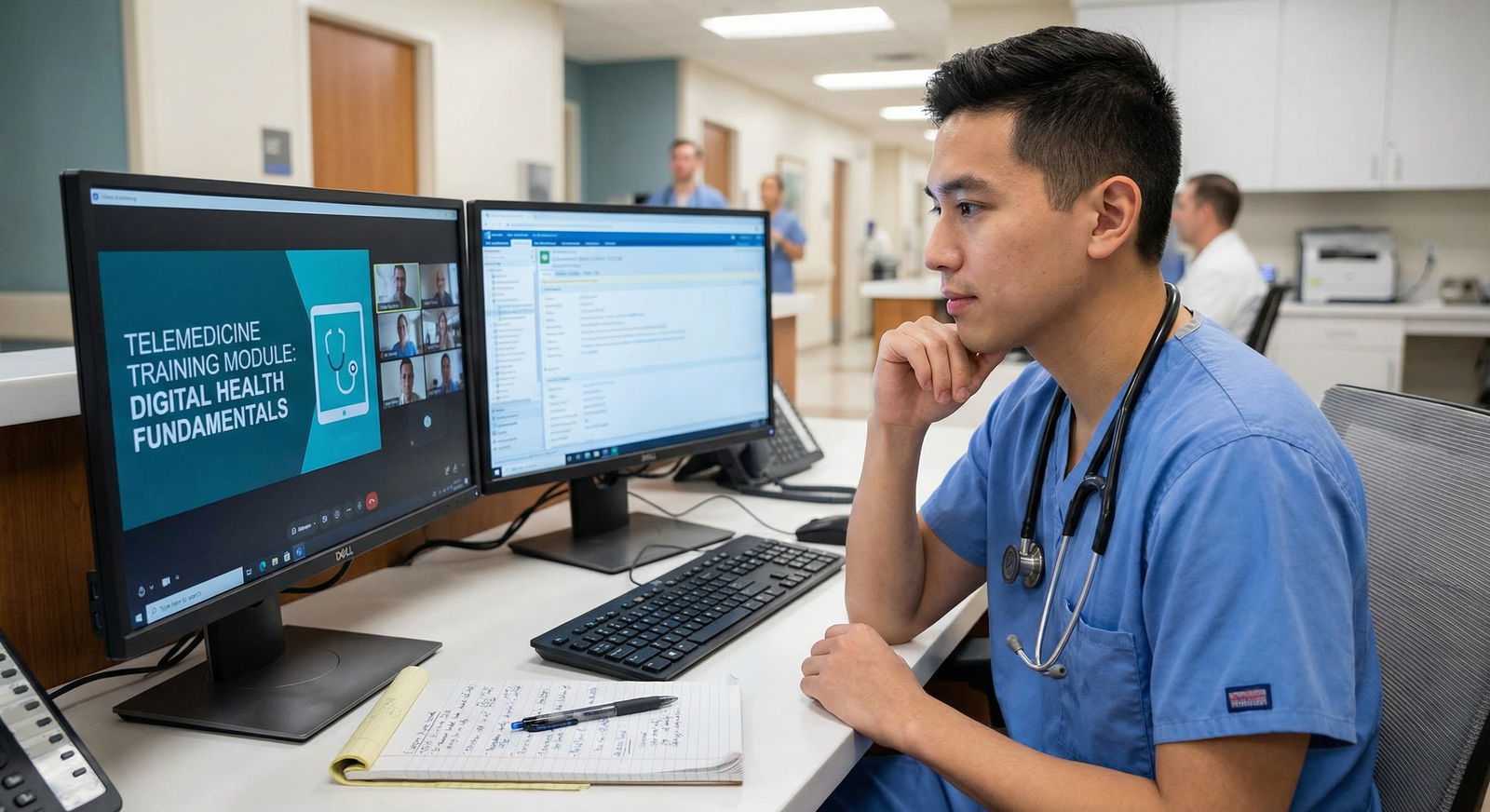
Auditors call it a "gap in duty of care." It's a checkbox, sure. But skipping it is like leaving a surgical sponge inside a patient. The act itself might not cause harm immediately, but the absence of it will get you hung.
Mistake #5: Prescribing Controlled Substances Without Extra Steps
The Ryan Haight Act isn't a suggestion. It's federal law, and it generally requires at least one in-person medical evaluation before prescribing controlled substances via telemedicine. During the pandemic, emergency waivers created a massive gray zone, but those waivers are sunsetting. Many physicians I talk to still believe they can prescribe Adderall or Ambien over video as long as they did a "thorough assessment." Wrong.
Even if you're in a state with an exemption for telemedicine psychiatric care, the DEA requires specific documentation: the prescription must contain a telemedicine exception code, and your chart must reference the qualifying circumstances. Pharmacies have automated systems that flag EPS (Electronic Prescribing System) scripts lacking that code. They'll reject it, and they'll report you.
Prescribing based solely on a chat-based questionnaire is a fast track to a DEA inquiry. I've seen a psychiatrist lose his DEA registration for prescribing benzodiazepines via a text-only telemedicine app. He argued he was providing access. The DEA argued he was running a pill mill. Without a real-time video exam and documented in-person equivalent, you're gambling.
Mistake #6: Poor Digital Consent Management
Verbal consent is worthless in telehealth. I'll say it again: verbal consent is not enough. You need a signed, electronic consent form that specifically states the patient understands the risks of telemedicine: potential privacy breaches, technical failures, inability to perform a physical exam, and what to do if the connection drops. I've seen malpractice carriers deny coverage because the consent form was a generic "consent to treat" that didn't mention telemedicine at all.
Plaintiffs' attorneys have a field day with this. "My client didn't agree to be treated via a mobile app. She thought she was getting an in-person visit." Even if that's absurd, it creates enough ambiguity to blow a settlement. The consent form must document that the patient acknowledges the technology limitations and accepts them. And it must be in the same language the patient speaks.
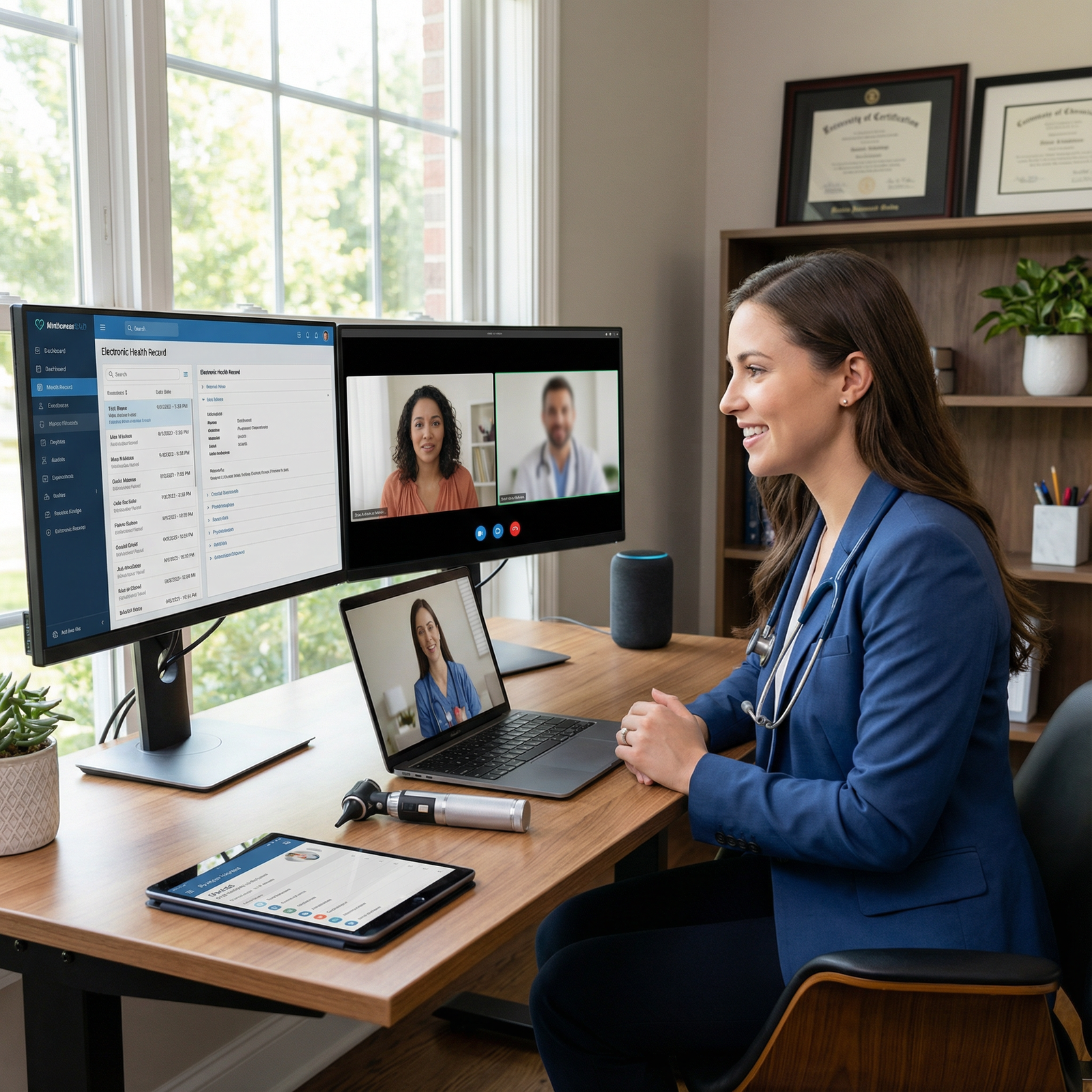
Many telemedicine platforms bury this consent in a long registration flow. That's dangerous. Your practice should maintain your own consent capture, timestamped and stored in the chart. I've seen a pain management clinic shut down because their consent forms were generic surgery consents, not telemedicine-specific. The state board called it "willful ignorance." That's a label that sticks.
Mistake #7: Neglecting Data Security & Device Hygiene
You open your laptop at a coffee shop, connect to patient records via the free Wi-Fi, and see a patient. If that Wi-Fi wasn't encrypted and behind a VPN, you just committed a data breach. Incident response teams see this all the time. Public Wi-Fi is a petri dish of man-in-the-middle attacks. And the HIPAA Security Rule demands that you protect ePHI with "reasonable and appropriate" safeguards. An open network is anything but.
Then there's the personal phone problem. If you use your own smartphone to text patients, check charts, or even access your work email without a Mobile Device Management (MDM) solution, your device is a ticking time bomb. I've seen backend logs from hospital audits where a provider's device name appears on the VPN at 3 AM from a suspicious IP. That's flagged immediately. If your device gets lost, and it isn't encrypted and remotely wipeable, you're personally liable.
A clean desk policy applies virtually. Privacy screens, two-factor authentication, strong passwords, never leaving your session open. Assume the auditor is watching your screen in real time. Because, in a sense, they are.
How to Future-Proof Your Practice: The Insider Checklist
Your license is your product. Not your notes, not your bedside manner, your license. Guard it with paranoia. Audit your workflow now, before the algorithm does. Verify your platform integration. Confirm your ID verification process meets the strictest state you practice in. Build emergency plan fields into every template. Update consent forms quarterly. Use a VPN and employer-managed devices.
Regulations change quarterly. Grab a compliance refresher every three months like you'd update your ACLS. Because in this new world, compliance isn't the annoying cousin of clinical care. It's the air you breathe. You can be the best diagnostician in the world, but if your metadata screams "non-compliant," you'll be out of a job before you even get to defend your practice.
I've seen brilliant careers unravel over timestamp gaps, missing emergency plans, and coffee shop Wi-Fi. Don't let yours be next.